
The Bachelor of Applied Science (B.A.S.) in Human Development at Delta State University is designed for students with a technical associate degree (A.A.S.) who want to advance into careers that support children, families, and communities. This interdisciplinary program combines coursework in human development, family systems, and Child Advocacy Studies Training (CAST) with one of 8 concentration areas.
Available on campus and online, the program prepares you for advanced study, licensure pathways, and careers in education, human services, and community leadership. Students explore how individuals and families develop across the lifespan while gaining practical skills to support healthy communities. Through specialized CAST training and trauma-informed approaches, students learn to recognize, prevent, and respond to child maltreatment. The program also emphasizes data-driven, evidence-based practices to strengthen programs and improve outcomes for children and families.
100
Online or On-campus Option
45
Career and Technical Credits Count Toward B.A.S. Degree Completion
8
Concentrations
Why Choose Human Development at DSU?

The B.A.S. degree in Human Development is designed to maximize your prior learning, allowing you to apply up to 45 hours of technical credit earned through an Associate of Applied Science (A.A.S.) degree. Delta State applies these credits toward your bachelor’s degree, building on your background in specialized, career-focused fields and providing a strong foundation for advanced study.
In addition to earning your bachelor’s degree, you’ll gain a nationally recognized Child Advocacy Studies Training (CAST) certificate and have the option to pursue an accelerated pathway toward the Master of Arts in Teaching (MAT). Through the accelerated M.A.T. pathway, you can complete up to 12 graduate credit hours while in the bachelor’s program in Human Development. These opportunities provide a clear advantage for community college students and graduates seeking careers in education, human services, and community leadership.
- Applications accepted year round
- Fall enrollment only
- 100% Online or On-campus option
- Student advisement available online
- Trade/technical credits count toward degree
- Flexible and part-time course scheduling available
- Earn the Child Advocacy Studies Training Certificate
- Earn graduate credit toward the Master of Art in Teaching
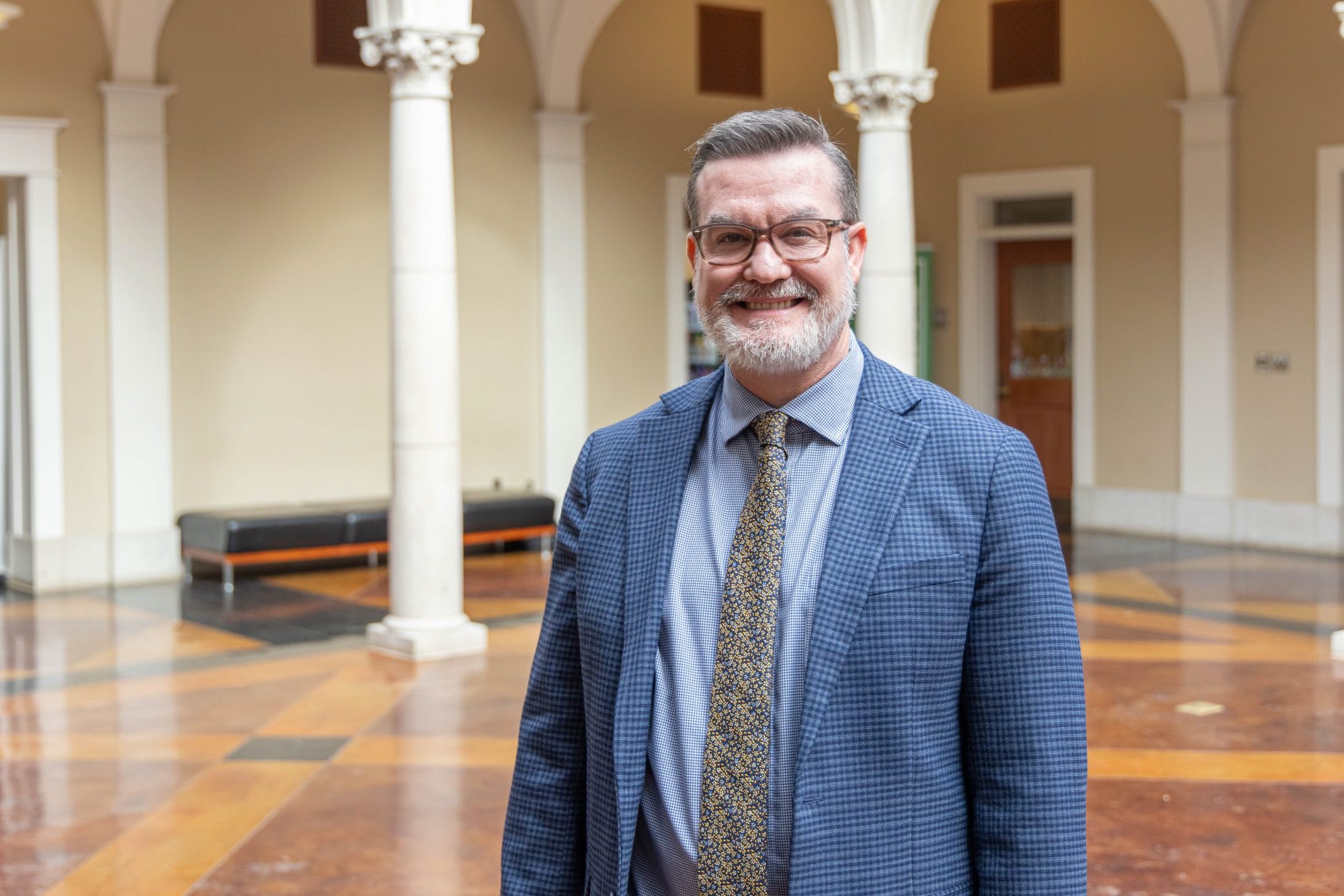
”The B.A.S. in Human Development meets students where they are, building on their experience while creating a clear, flexible pathway to advance their education, grow their careers, and serve their communities.
Jeffrey L. Leffler, Ph.D.Associate Provost and Vice President for Academic Affairs
Concentrations in Human Development
- Child Studies
- Criminology
- Elementary Teaching
- Family Studies
- Integrated Human Development
- Psychology of Industry
- Secondary Teaching
- Social Science

Child Studies
The Child Studies concentration builds advanced competencies in child development, early learning environments, literacy instruction, inclusive practices, and program administration. This concentration prepares students to work effectively in early childhood and child-focused settings, including preschools/Head Start, healthcare environments, family services, and community programs, while also equipping them with the skills to address current issues and advocate for children and families.
Students without career and technical education credits can choose Delta State’s B.S. in Family and Child Studies.

Criminology
The Criminology concentration provides students with comprehensive understanding of criminal behavior, law, and justice systems through the study of theory, policy, investigation, victimology, and ethics. This concentration prepares graduates for careers in law enforcement, corrections, victim advocacy, and related justice professions, as well as for advanced study in criminal justice, criminology, or law.
Students without career and technical education credits can choose Delta State’s B.S. in Criminal Justice and Criminology.

Elementary Teaching
The Elementary Teaching concentration equips students with the knowledge, skills, and practical strategies needed to design engaging instruction, manage diverse classrooms, integrate the arts and literacy across the curriculum, and assess student learning. This concentration prepares eligible graduates to pursue the Master of Arts in Teaching (alternate route) program, leading to licensure as elementary teachers in Mississippi.

Family Studies
The Family Studies concentration integrates psychology, family science, and health to provide students with a deep understanding of family relationships, human development, and well-being across the lifespan. This concentration equips students with skills to support families in diverse contexts and address complex social, emotional, and behavioral challenges. Graduates may also pursue advanced study in fields such as marriage and family therapy, counseling, psychology, or related human services professions.
Students without career and technical education credits can choose Delta State’s B.S. in Family and Child Studies.

Integrated Human Development
The Integrated Human Development concentration provides students with the flexibility to design an individualized program of study tailored to their career goals and interests. By selecting advisor-approved upper-division courses from disciplines such as education, criminology, psychology, social work, family and consumer sciences, and political science, students gain an interdisciplinary perspective on the complex issues facing individuals, families, and communities. This concentration prepares graduates for a wide range of careers in education, human services, advocacy, and community leadership, as well as for advanced study in related fields.

Psychology of Industry
The Psychology of Industry concentration combines psychology and management to explore how individuals and groups function in organizational settings. Coursework integrates principles of management, human resources, organizational behavior, social cognition, personality, and human factors engineering to prepare students for careers in business, human resources, organizational development, and applied psychology. Students who complete this concentration also earn the embedded Certificate in Applied Psychology of Industry, a credential designed to signal to employers their mastery of material relevant to business and industry. This pathway provides an excellent opportunity to develop the soft skills essential for success in organizational and industry management while also building a foundation for graduate study in industrial-organizational psychology, human resources, or business administration.

Secondary Teaching
The Secondary Teaching concentration prepares students for advanced content knowledge in their chosen endorsement area—biology, english, music (choral or vocal), physical education, or social studies—along with essential skills in instructional methods, classroom management, assessment, and inclusive practices. This concentration equips eligible graduates to pursue the Master of Arts in Teaching (alternate route) program, leading to licensure as secondary teachers in Mississippi.
Social Science
The Social Science concentration integrates the study of government, law, justice, social systems, and public policy with applied learning experiences in the field. Courses emphasize American government, judicial processes, ethics, rural and community studies, sociology, and research methods, providing students with a broad understanding of political and social systems and the analytical skills to examine them. Graduates are prepared for careers in public service, law, community advocacy, criminal justice, and policy analysis, as well as for graduate study in political science, sociology, public administration, or law.
What Can I Do With a B.A.S. in Human Development?
The B.A.S. in Human Development prepares graduates for careers that support children, families, and communities through education, human services, and community organizations. Students develop practical skills in communication, teamwork, conflict resolution and data-informed decision making while gaining experience working with various populations. Graduates are prepared for roles in schools, nonprofit organizations, government agencies, healthcare systems, and community development programs. Career opportunities may include:
- Social and Human Services Assistant
- Case Manager/Coordinator
- Community Outreach Coordinator
- Family Support Specialist
- Youth Development Specialist
- Program Coordinator (Nonprofit or Community Programs)
- Behavioral Health Technician
- Victim Services Advocate
- Student Success or Retention Coach
- Attendance or Behavior Specialist
- Community Health Outreach Coordinator
- Re-entry or Diversion Program Navigator
Scholarships
At Delta State University, we understand the importance of an affordable education. While we currently do not offer scholarships specifically for our Bachelor of Science in Human Development program, students may be eligible for non-program specific scholarship opportunities. We also offer an affordable tuition rate with no additional fees for out-of-state students. In addition, we work closely with students to identify and apply for federal and state financial aid programs, as well as student loans and state scholarships. We are committed to providing our students with all of the tools necessary to succeed in many fields, including access to affordable education and financial support.
Program Goals
The Bachelor of Applied Science in Human Development equips graduates with the knowledge and practical skills needed to support individuals, children, and families in educational, community, and human service settings. Students learn to apply lifespan development and family systems theory to support the well-being of individuals, children, and families; integrate Child Advocacy Studies Training (CAST) and trauma-informed practices to help identify, prevent; and respond to child maltreatment; and use both quantitative and qualitative evidence to make informed decisions and evaluate programs that support communities.
Admission Requirements
Applicants of this program must meet Delta State University’s undergraduate admission requirements.
Students admitted to the Bachelor of Applied Science in Human Development program are required to have an Associate of Applied Science (A.A.S.) degree, an approved technical associate degree, a minimum of 45 hours of career and technical credits from a SACSCOC accredited community college, or up to 45 hours of military credit.
Curriculum
The following courses are required to complete a concentration in the B.A.S. in Human Development major.
Child Studies (concentration)
| Course Number & Course Title | Credits | |
| CEL 314: Early Literacy Instruction I | 3 | |
| CSP 340: Survey of Special Education and Inclusive Teaching, or PSY 420: Applied Behavior Analysis |
3 | |
| FCS 326: Introduction to Child Development, or CEL 300: Human Growth and Development |
3 | |
| FCS 328: Education for Parenthood | 3 | |
| FCS 329: Early Learning Environments | 3 | |
| FCS 330: Infant and Toddler Development, or PSY 313: Psychology of Adolescence |
3 | |
| FCS 331: Children in Healthcare | 3 | |
| FCS 377: Methods and Materials for Preschool Programs, or CEL 301: Introduction to Elementary Education |
3 | |
| FCS 476: Administration of Early Childhood Programs, or SSC 470: Methods of Social Science Research |
3 | |
| FCS 493: Current Trends and Issues in Child Development | 3 | |
| TOTAL | 30 | |
Criminology (concentration)
| Course Number & Course Title | Credits |
| CRJ 200: Criminal Justice Policy and Practice | 3 |
| CRJ 336: Juvenile Delinquency | 3 |
| CRJ 405: Introduction to Criminological Theory | 3 |
| CRJ 407: Criminal Law | 3 |
| CRJ 410: Applied Criminal Investigation | 3 |
| CRJ 426: Victimology | 3 |
| CRJ 434: Global Terrorism | 3 |
| CRJ 455: Ethics in Social Justice and Criminology | 3 |
| CRJ 480: Criminal Justice Practicum | 3 |
| PSC 440: The Judicial Process | 3 |
| Total | 30 |
Elementary Teaching (concentration)
| Course Number & Course Title | Credits |
| ART 361: Art Content & Techniques | 3 |
| CEL 300: Human Growth and Development | 3 |
| CEL 301: Introduction to Elementary Education | 3 |
| CEL 310: Instructional Planning | 3 |
| CEL 314: Early Literacy Instruction I, or CEL 514: Early Literacy Instruction I* |
3 |
| CEL 317: Principles of Teaching in Early Childhood | 3 |
| CEL 318: Principles of Teaching in Middle Grades | 3 |
| CEL 393: Classroom Management, or CEL 611: Classroom Management* |
3 |
| CEL 497: Diagnosis and Evaluation of Student Achievement in the Elementary School, or CEL 612: Development, Assessment, and Evaluation* |
3 |
| CSP 340: Survey of Special Education and Inclusive Teaching, or CSP 546: Advanced Survey of Exceptional Children* |
3 |
| Total | 30 |
*Special permission applies for graduate-level course
Family Studies (concentration)
| Course Number & Course Title | Credits |
| FCS 215: Personal Finance | 3 |
| FCS 325: Marriage, Family Living, and Sex Education | 3 |
| FCS 328: Education for Parenthood | 3 |
| FCS 343: Nutrition and Physical Fitness, or FCS 345: General Nutrition |
3 |
| PSY 101: General Psychology | 3 |
| PSY 307: Developmental Psychology | 3 |
| PSY 313: Psychology of Adolescence, or PSY 315: Social Psychology |
3 |
| PSY 314: Psychology of Human Sexuality, or PSY 420: Applied Behavior Analysis |
3 |
| PSY 330: Research Methods | 3 |
| Total | 30 |
Integrated Human Development (concentration)
| Course Number & Course Title | Credits | |
| Choose any advisor-approved upper division course with CEL, CRD, CRJ, CSP, CUR, EPY, FCS, PSC, PSY, or SWO prefix (prerequisites apply) |
21 | |
| Choose any advisor-approved elective | 9 | |
| TOTAL | 30 | |
Psychology of Industry (concentration)
| Course Number & Course Title | Credits |
| MGT 300: Principles of Management | 3 |
| MGT 327: Human Resources Management | 3 |
| MGT 484: Organizational Behavior | 3 |
| MKT 300: Principles of Marketing | 3 |
| PSY 101: General Psychology | 3 |
| PSY 342: Ethical and Professional Issues | 3 |
| PSY 320: Human Factors Engineering | 3 |
| PSY 403: Theories of Personality | 3 |
| PSY 330: Research Methods | 3 |
| PSY 499: Honors Thesis, or PSY 331: Statistics |
3 |
| Total | 30 |
Secondary Teaching (concentration)
| Course Number & Course Title | Credits |
| Endorsement courses*** in a content area: Biology, English, Music (choral), Music (vocal), Physical Education, or Social Studies | 18 |
| CUR 380 – Secondary Methods I, or CSD 614 – Methods of Instruction in Secondary Schools* |
3 |
| CUR 393 – Classroom Management, or CEL 611 – Classroom Management* |
3 |
| CUR 400 – Assessment, Data Analysis, and Evaluation, or CUR 612 – Development, Assessment, and Evaluation* |
3 |
| CSP 340 – Survey of Special Education and Inclusive Teaching, or CSP 546 – Advanced Survey of Exceptional Children* |
3 |
| Total | 30 |
*Special permission applies for graduate-level course
***Minimum of nine hours must be upper division
Social Science (concentration)
| Course Number & Course Title | Credits |
| CRJ 455: Ethics in Social Justice and Criminology | 3 |
| GEO 201 or GEO 203 | 3 |
| GEO 400-Level Elective | 3 |
| PSC 201: American National Government | 3 |
| PSC 440: The Judicial Process | 3 |
| SOC 101: Principles of Sociology | 3 |
| SOC 403: Social Problems | 3 |
| SSC 469: Quantitative Methods for the Social Sciences | 3 |
| SSC 470: Methods of Social Research | 3 |
| SWO 302: Understanding Rural Communities | 3 |
| Total | 30 |
Degree Requirements
To earn this degree, you must successfully complete at least 121 credits, including your general education requirements and the major requirements below.
| General Education | 30-32 |
| University Requirement | 1 |
| Career/Technical Course Transfer | 45 |
| Child, Family, and Advocacy Core | 15 |
| Concentration | 30 |
| TOTAL DEGREE REQUIREMENTS | 121 |
For more information on degree requirements and specifics on courses needed to complete the degree, consult the Undergraduate Academic Catalog. For a semester-by-semester breakdown on how you can complete this degree in 4-years, visit academic maps.