
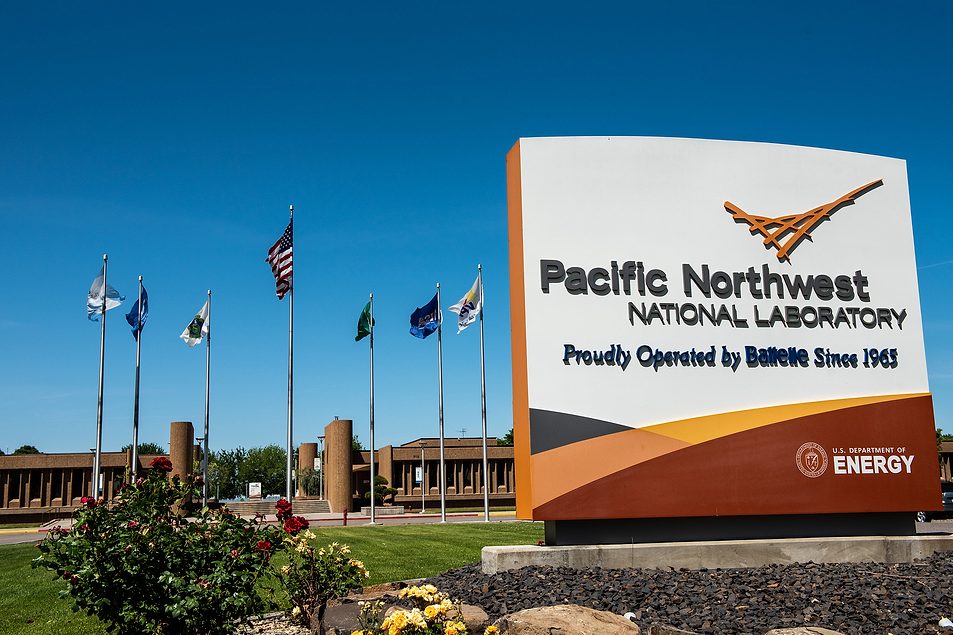
 The U.S. Department of Energy’s Pacific Northwest National Laboratory in Richland, Washington has entered into a new agreement with Delta State University to provide access to cutting-edge research technology.
CLEVELAND, Miss. — Delta State University has strengthened its research capabilities through a new agreement with the U.S. Department of Energy’s Pacific Northwest National Laboratory (PNNL). The agreement grants DSU access to the Environmental Molecular Sciences Laboratory (EMSL), a billion-dollar national user facility that supports advanced research in biology, chemistry, and environmental science.
Through this partnership, Delta State joins an elite network of institutions conducting research with EMSL’s advanced instrumentation and data-science capabilities, including cryogenic electron microscopy (cryo-EM), mass spectrometry, and high-performance computing. The collaboration marks a major expansion of DSU’s research infrastructure, placing it on par with Mississippi’s largest research universities. It builds upon the foundation established by the Mississippi IDeA Network of Biomedical Research Excellence (Mississippi INBRE), a statewide program that strengthens biomedical research capacity at primarily undergraduate institutions.
The first DSU project under the new agreement will be led by Dr. Christopher Jurgenson, Sullivan-Outlaw Professor of Biochemistry, who will use EMSL’s cryo-EM facility to determine the structure of a plant enzyme involved in producing the medicinal compound berberine. Research on the enzyme is a Mississippi INBRE-supported project, highlighting the program’s ongoing role in advancing faculty research and enabling Delta State to expand its reach into high-impact areas of molecular and structural biology.
“This partnership gives our students and faculty access to some of the most advanced scientific tools in the world,” said Jurgenson. “It represents a major step toward positioning Delta State as a competitive emerging research institution within Mississippi.”
“This collaboration with PNNL and EMSL elevates the entire Division of Mathematics and Sciences,” said Dr. Joseph Bentley, interim chair of the division. “Access to world-class facilities like the cryo-EM center significantly broadens the scope and depth of the research our faculty can pursue. It positions Delta State to compete at a level that was previously out of reach and reinforces our commitment to providing a rigorous, high-quality scientific education in the Mississippi Delta.”
For more information about STEM programs at Delta State University, visit the College of Nursing, Health, and Sciences website at www.deltastate.edu/nursing-health-sciences/.